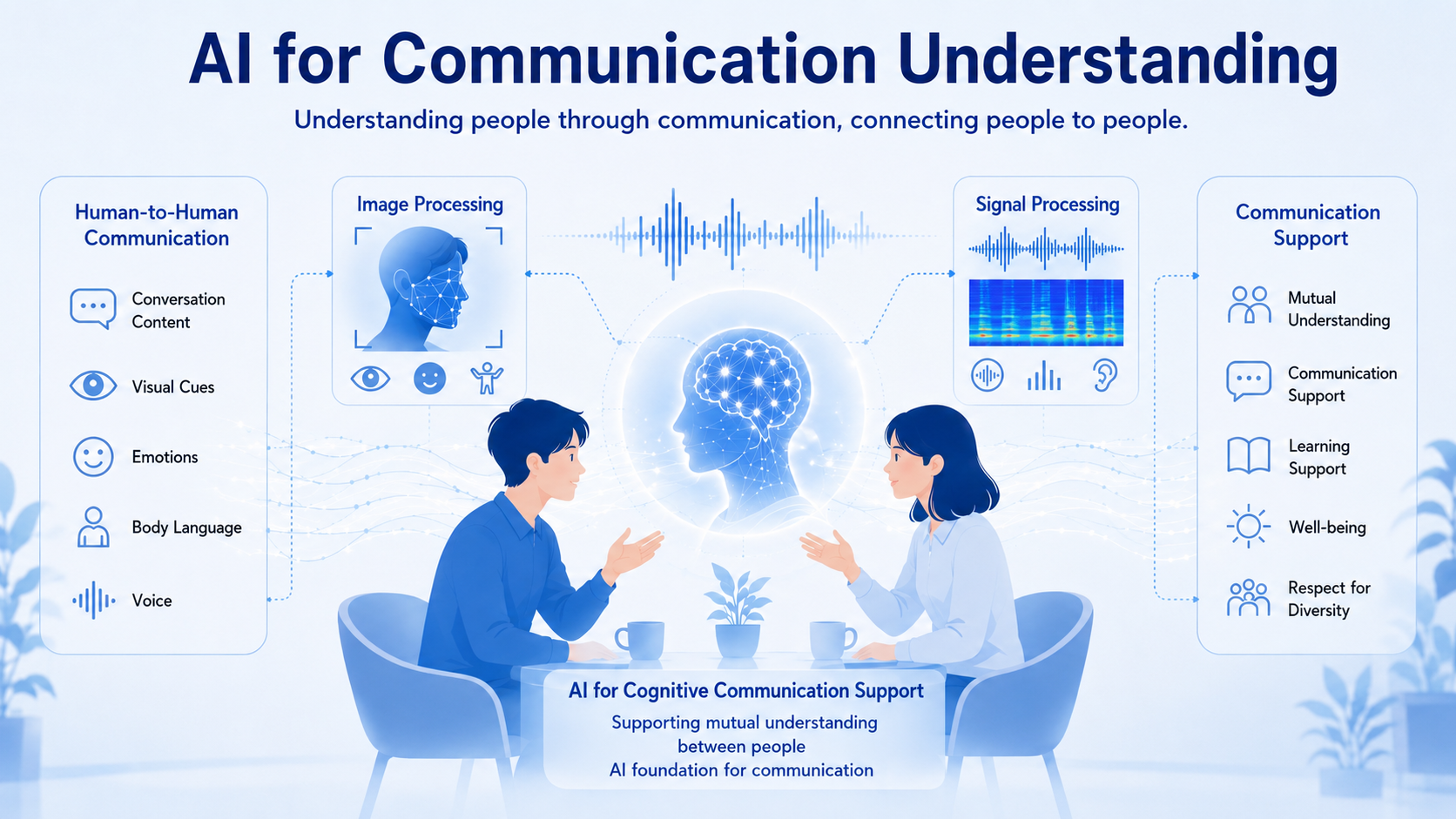
AI-Based Communication Understanding
Human communication includes not only words, but also gaze, facial expressions, body motion, voice, timing, and context. These multimodal signals shape how people understand each other.
Hariyama Laboratory uses AI to analyze linguistic and nonverbal information together, aiming to understand communication characteristics, conversational naturalness, and interaction styles.
Language Information Analysis
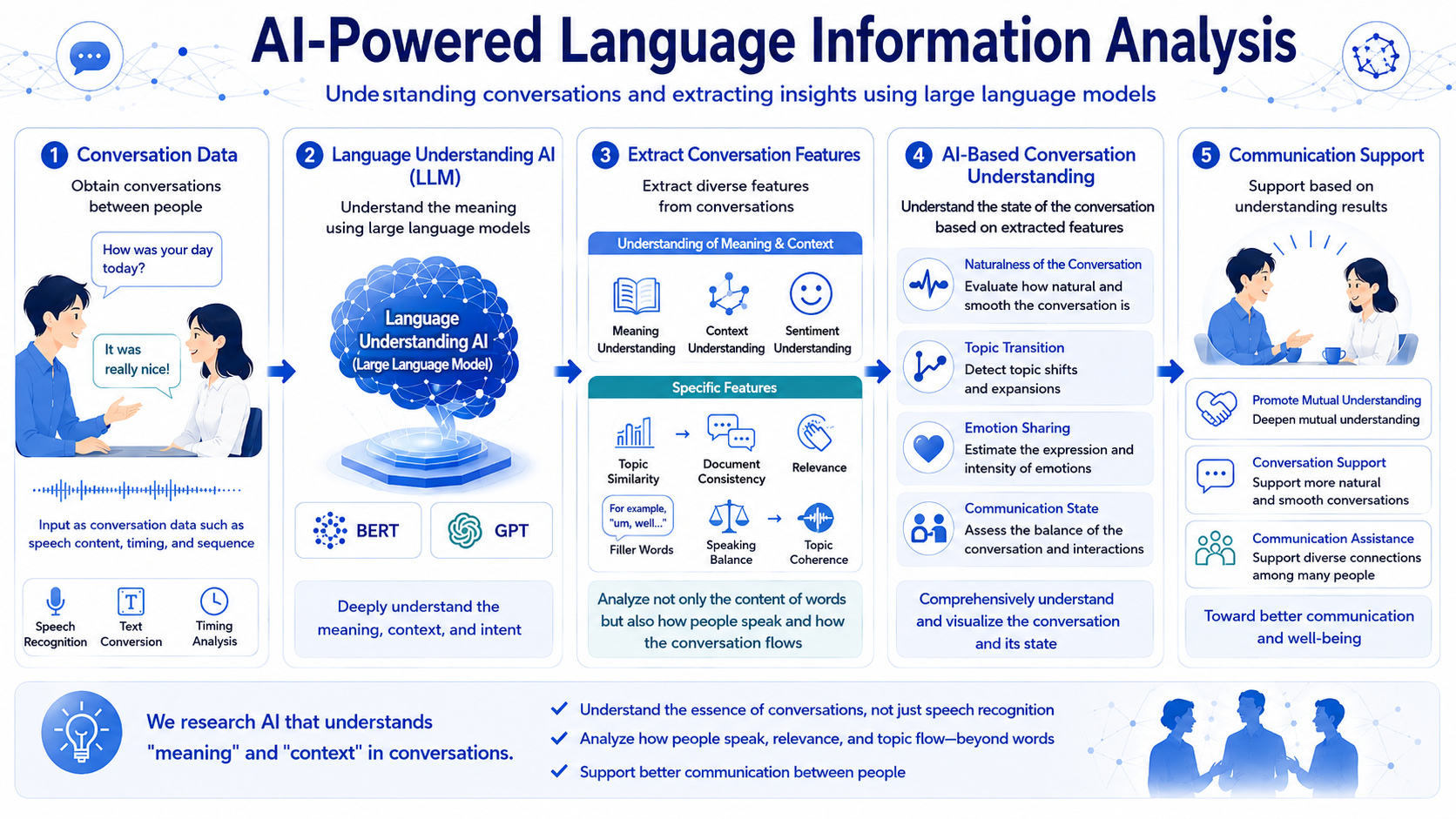
Conversation contains far more than individual utterances. Topic transitions, contextual consistency, backchannels, speaking balance, and word choice all provide useful information.
We apply large language models and natural language processing techniques to quantify these features and analyze the state of communication in an objective way.
Nonverbal Information Analysis
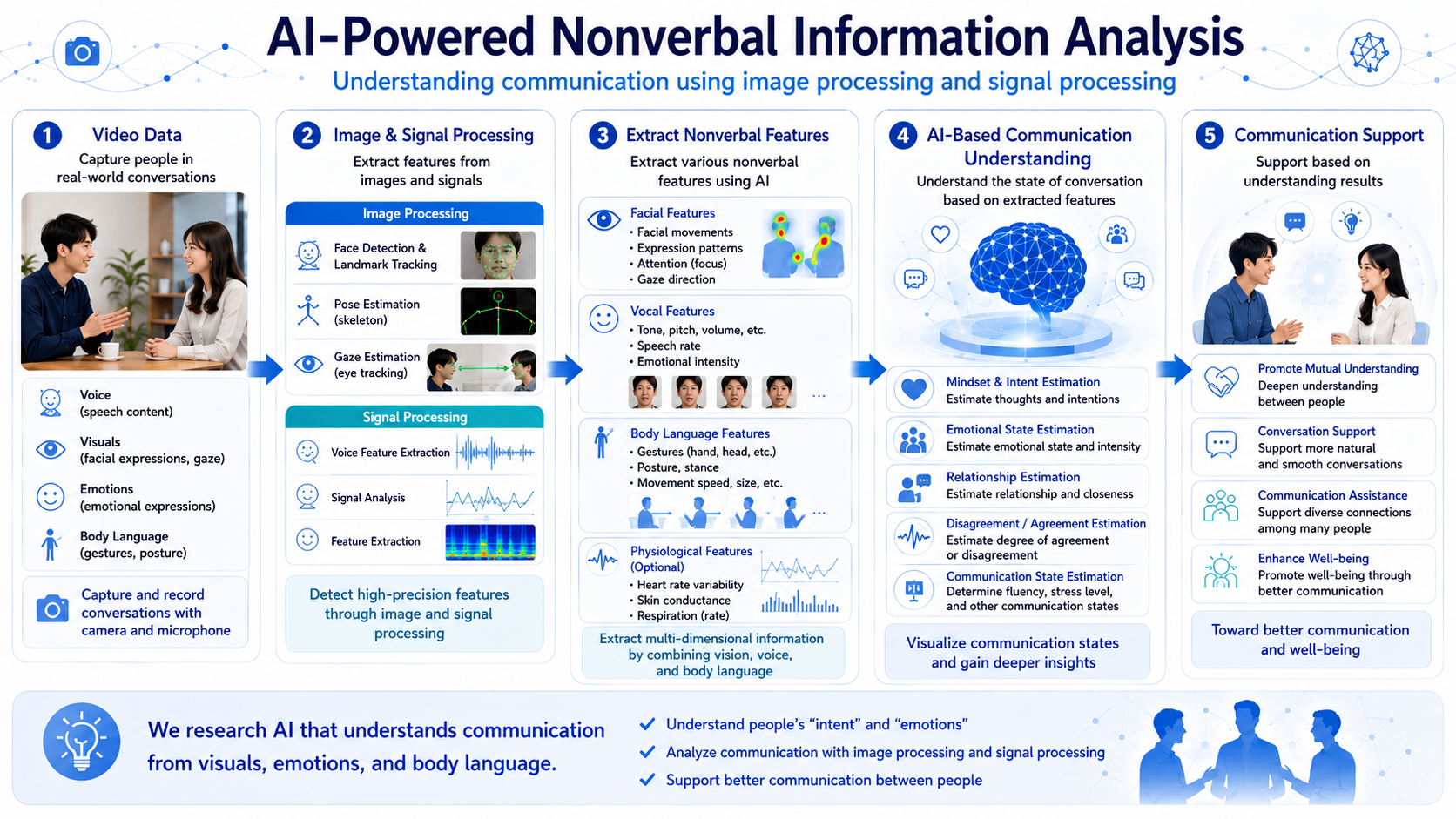
Nonverbal information plays an essential role in communication. We use image processing and signal processing to extract gaze, expression, posture, gesture, and body motion from video and sensor data.
By analyzing these features over time, we aim to estimate attention, emotional sharing, participation, and interaction patterns between people.
Conversation Style Analysis
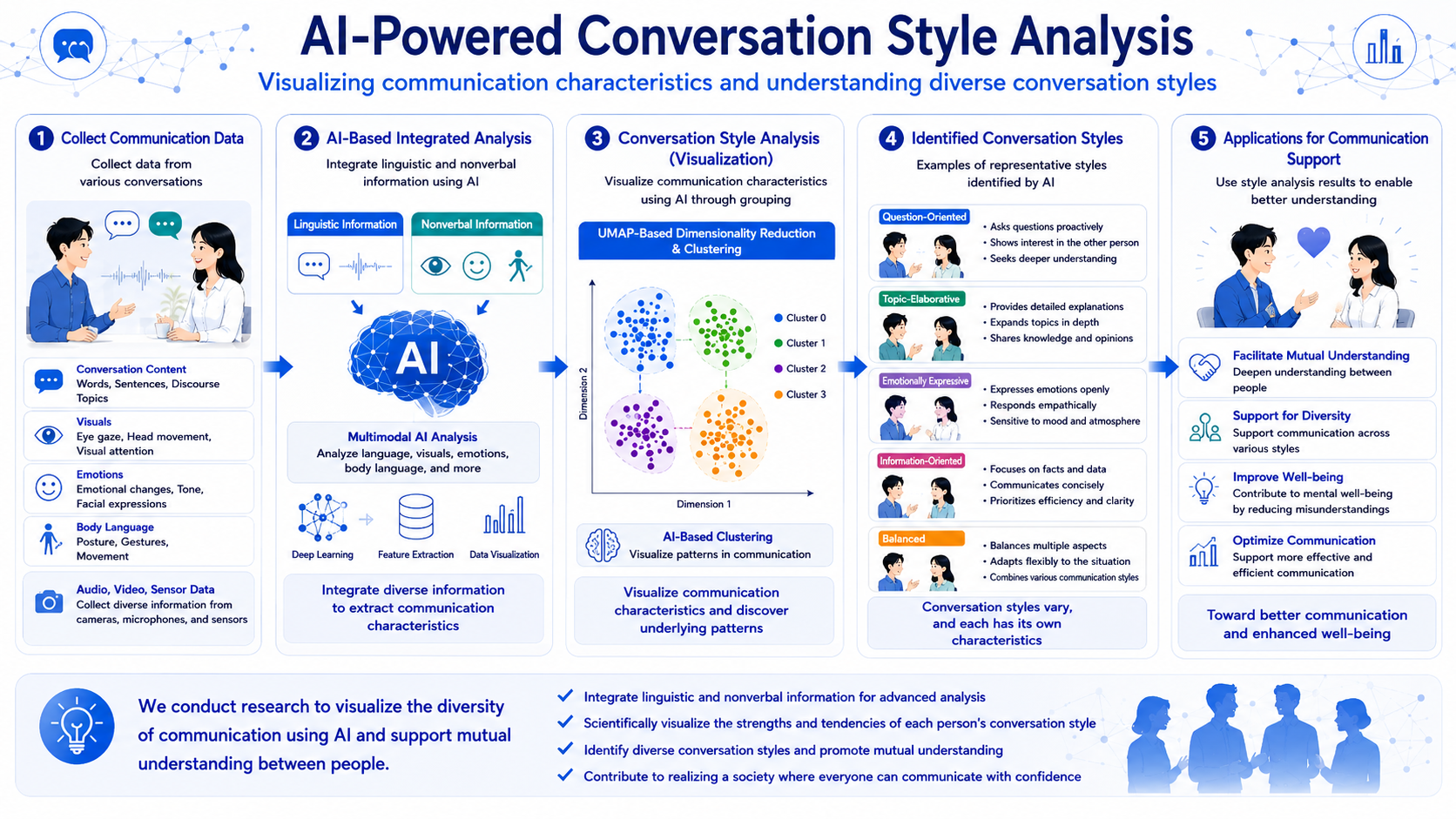
Every person has a different communication style. Some people focus on listening with empathy, some actively introduce new topics, some express their opinions clearly, and others maintain a balanced interaction.
Our goal is not to evaluate people, but to understand the diversity of communication styles and help people communicate more comfortably.
Applications to Communication Support
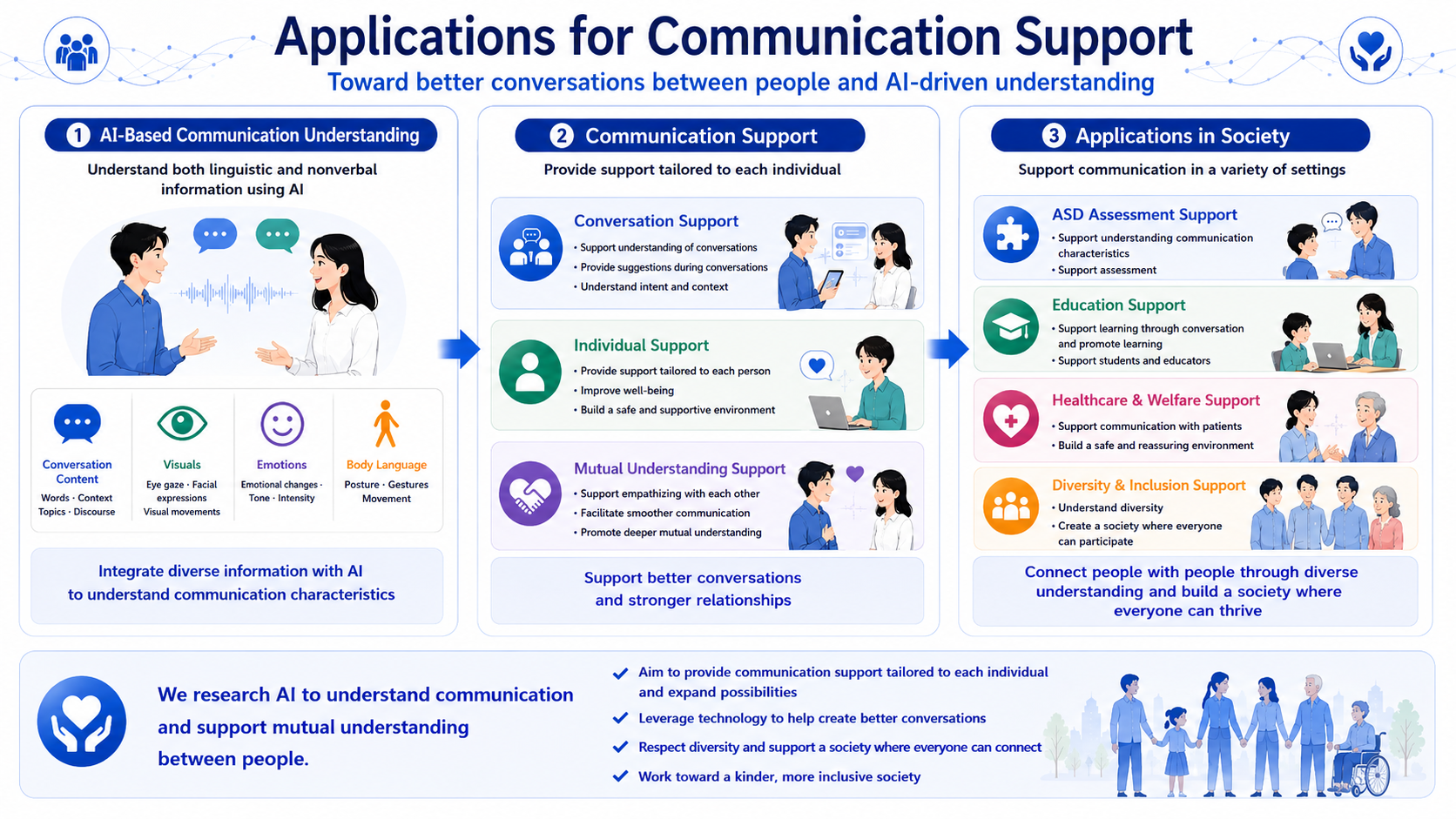
Communication analysis technologies can be applied to many areas, including communication support, education, healthcare and welfare, ASD assessment support, and the promotion of diversity.
We aim to create AI systems that help people understand one another and build richer, more inclusive communication environments.